A Freeze dried furit manufacturer’s perspective on quality, supply reliability, and application fit — for food brands, retailers, and procurement teams.
Every year, more food brands, snack companies, and ingredient buyers approach the freeze-dried fruit category with the same initial question: “Is it worth the premium?” After more than two decades in food manufacturing — starting with air-dried seasonings and growing into a fully dedicated freeze-drying operation — the honest answer is: it depends entirely on how you use it, and who you source it from.
This article isn’t a primer on what freeze-drying is. If you’re reading this as a procurement manager, product developer, or private-label buyer, you already know the basics. What you may not know is what separates a supplier that delivers a consistent, spec-compliant product from one that creates expensive headaches at scale — and how to evaluate freeze-dried fruit not just as a commodity, but as a critical functional ingredient.
1. The Equipment Gap: Why FD Furit Production Infrastructure Matters More Than You Think
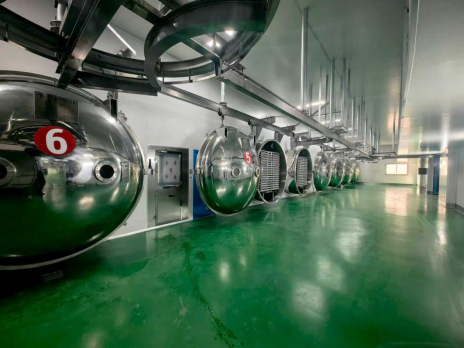
Freeze-drying is capital-intensive. A high-performance industrial lyophilizer represents a significant investment. It must maintain precise temperature and vacuum cycles across large batch volumes. Not every supplier listing freeze-dried fruit actually controls that infrastructure. Some act as traders sourcing from multiple small facilities. This introduces variables that are difficult to audit and harder to control.
For buyers, the practical implication is consistency. When production equipment varies between batches, final product quality can change. The risk becomes greater when production moves between facilities. Buyers may see irregular moisture content, color deviation, and structural integrity issues. These problems often appear only after the product enters a formulation.
Our production setup at FD Planet illustrates the difference. We operate six production lines, each 200 meters long. Our freeze-drying chambers are sourced from German engineering partners. This allows us to standardize the process at a much higher level. We can deliver the same moisture curve across every order. We can also maintain the same crunch profile and color index. This is not about claiming German equipment is inherently superior. It is about disciplined investment in infrastructure. That investment removes variability from the equation.
When evaluating a potential supplier, ask them directly: Do you own your freeze-drying equipment? What is your total installed capacity? How many independent production lines do you operate? Their answers will tell you more about supply reliability than any brochure.
2. Freeze-dried fruit Quality Control Is a System, Not a Certificate
Food safety certifications — BRC, FSSC 22000, ISO 22000, Halal, Kosher — are necessary but not sufficient. They show that a supplier has implemented a documented quality management system. However, they do not show how that system performs under pressure. A raw material batch may arrive slightly over-ripe. A cold chain disruption may occur during incoming inspection. A customer may need a deviation report within 48 hours.
In freeze-dried fruit production, quality control is layered across the entire process — and each layer can fail independently:
- Raw material sourcing: Freeze-drying amplifies everything in the source fruit — including defects. Overripe strawberries produce a darker, more acidic product. Unripe mango lacks the aromatic compound development needed for a clean flavor profile. Suppliers who control their raw material procurement — ideally through long-term grower relationships or co-located cold storage — have a structural advantage here.
- In-process moisture monitoring: Finished moisture levels below 3% are the standard benchmark for most applications. But the challenge is achieving this uniformly across an entire batch, particularly with fruits that have irregular cell structures — pineapple and mango, for example, have significantly higher initial water activity than berries. Advanced equipment with active humidity control during the sublimation phase is what enables this.
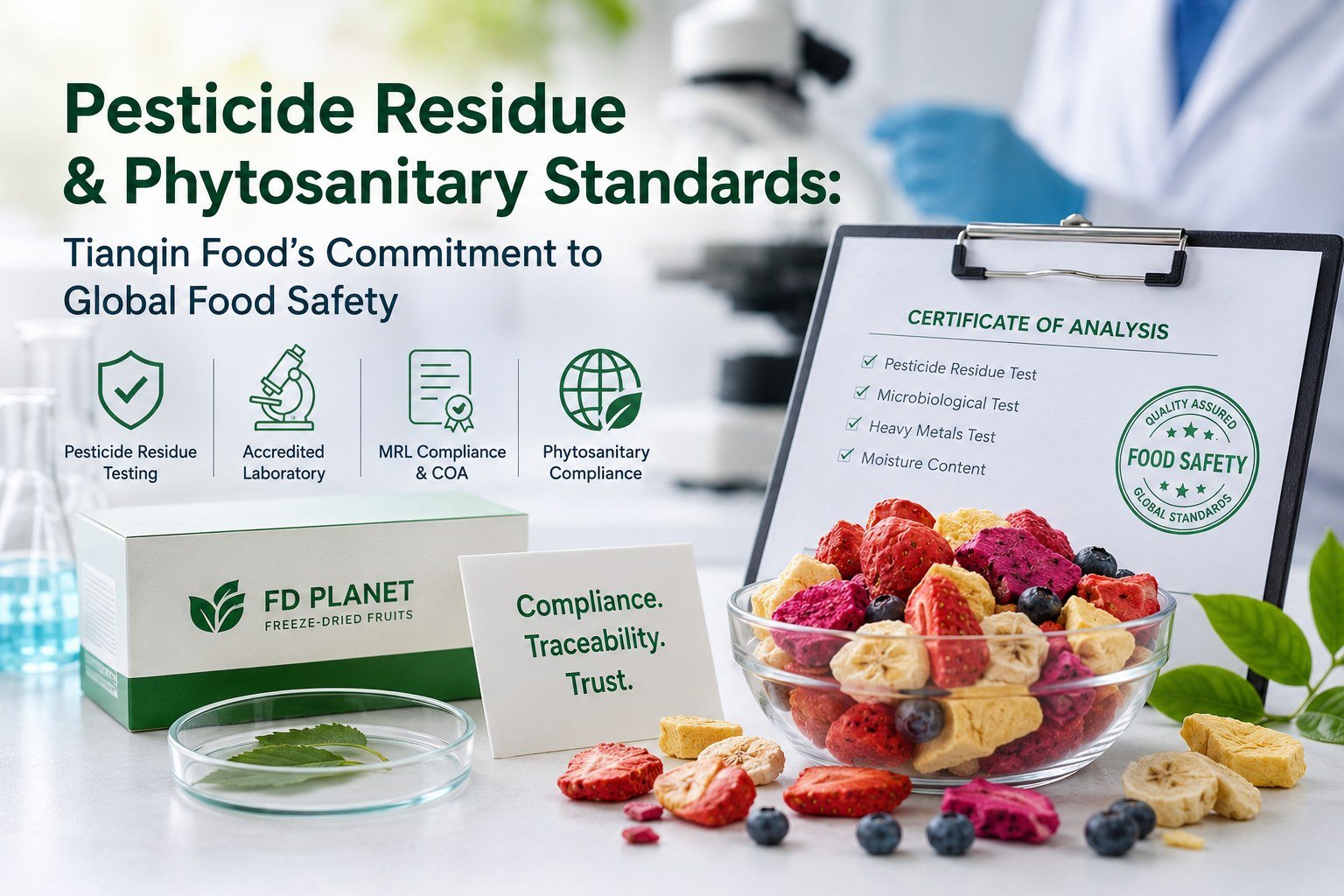
- Microbiological testing: Freeze-drying is not a sterilization process. Pathogen testing — for Salmonella, E. coli, Listeria, and total yeast and mold counts — should be conducted per batch, not per quarter. Any supplier unwilling to share CoA (Certificate of Analysis) data on a per-lot basis is a liability, not a partner.
- Finished product sensory evaluation: Objective lab data captures some variables; trained sensory panels capture others. Color, aroma intensity, crunch level, and dissolution rate in liquid applications are properties that matter enormously to end consumers but can be missed entirely by standard lab protocols.
A supplier’s quality culture is visible in how they respond to non-conformances, not just in how they describe their processes. Ask them about a rejection event in the past 12 months — what happened, how it was handled, what was changed. That conversation is more revealing than a certification audit summary.
3. Application Fit: Matching the Right Fruit Format to the Right End Use
Freeze-dried fruit is not a single product format — it is a family of options. The form you specify has direct implications for cost, shelf life behavior, and sensory performance in your finished product. This is where many procurement teams leave significant value on the table by defaulting to a familiar format rather than engineering the right one.
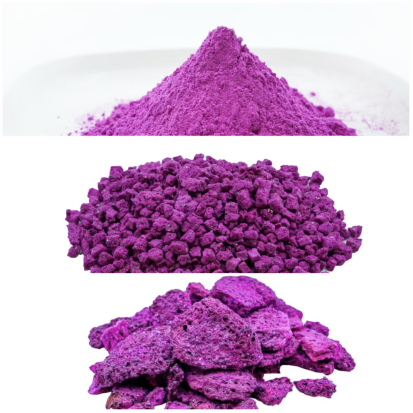
Whole pieces and slices
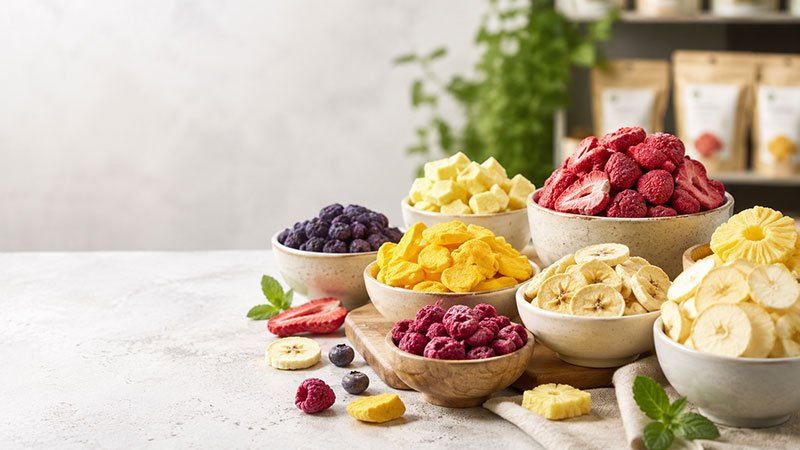
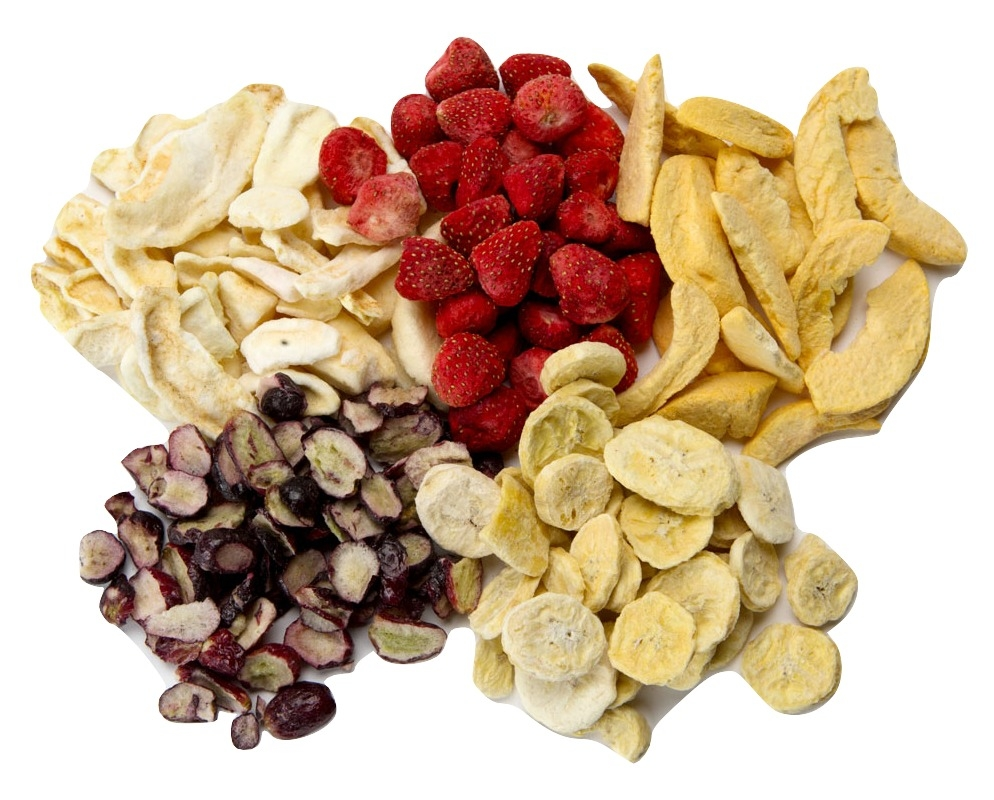
Ideal for premium snack applications, trail mix inclusions, and retail display formats where visual appeal drives purchase decisions. Whole strawberries, banana slices, and mango chunks carry strong consumer recognition and translate well to premium pricing. The trade-off is fragility — these formats require careful secondary packaging and are more susceptible to breakage in high-speed filling lines.
Diced and granulated formats
The workhorse of the ingredient sector. Blueberry granules in overnight oats, raspberry pieces in chocolate bars, apple dices in breakfast cereals — diced formats balance visual character with handling practicality. They disperse more evenly in dry mix applications and are easier to incorporate on automated dosing systems. Specify a consistent mesh size range and request sieve analysis data from your supplier to ensure batch-to-batch uniformity.
Powder formats
Pure flavor and color delivery, with no added carriers or anti-caking agents. Freeze-dried strawberry powder, for example, provides a natural red pigment alongside the flavor profile of fresh fruit — a clean-label alternative to synthetic colorants in yogurt coatings, confectionery fillings, and smoothie bases. Powder format also allows for significant concentration effects: the nutrient density per gram is substantially higher than fresh fruit equivalents, which matters in supplement-adjacent applications.
One often-overlooked consideration in format selection is rehydration behavior. If your application involves any moisture exposure — a coating, a filling, a beverage — understand how quickly the format will absorb water and what that does to texture. Porous cellular structures in freeze-dried fruit rehydrate rapidly; in some applications this is desirable, in others it causes a textural collapse that ends shelf life in hours rather than months.
4. Freeze dried fruit Supply Chain Depth: What Happens When Demand Spikes or Harvests Fail
The freeze-dried fruit category experienced significant supply disruption during 2021–2023, driven by a combination of logistics bottlenecks, raw material shortages, and surging demand from pandemic-era pantry stocking behavior. Many buyers who had single-sourced their supply discovered that their supplier’s production commitments were over-extended, and lead times stretched from 4 weeks to 16 weeks or more.
Resilient sourcing requires understanding a supplier’s depth — not just their headline capacity, but their ability to absorb demand volatility without compromising your allocation. Key questions include:
- How many independent production lines are operational, and what is the typical utilization rate?
- Do they maintain raw material inventory, or do they produce on a fresh-supply-only basis?
- How many distinct fruit varieties do they process, and does cross-product scheduling create bottlenecks during peak seasons?
- What is their contingency plan for a raw material shortfall in a single variety?
A manufacturer that has been in continuous operation since 1997 — through currency fluctuations, regulatory changes, pandemic-era disruption, and shifting global demand patterns — will have navigated these scenarios before. Ask them about it. Their institutional experience is a supply chain asset that doesn’t appear on any product specification sheet.
5. The Clean Label Dividend: Why Ingredient Transparency Is Now a Commercial Requirement
Consumer-facing food brands in Europe, North America, and increasingly in Asia-Pacific markets are under mounting pressure to simplify their ingredient declarations. The clean label movement — which at its core means removing anything a consumer can’t recognize or pronounce from the label — has elevated freeze-dried fruits from a premium ingredient curiosity to a mainstream formulation strategy.
Freeze-dried fruit’s value proposition in this context is straightforward: it is, in most cases, a single-ingredient product. No preservatives. without sugar. No artificial colors. The label reads “freeze-dried strawberry” — and that’s it. For a product developer trying to hit a five-ingredient target on a snack bar, or a cereal brand replacing synthetic berry flavoring with real fruit inclusion, they are willing to pay a significant cost premium for that simplicity rather than use processed alternatives.
What this means for buyers is that the clean label claim must be fully defensible. Your supplier’s raw material inputs, processing aids, and packaging materials all need to meet a zero-additive standard. Ask for full ingredient disclosure — not just the finished product spec, but the processing documentation that confirms no carrier agents, anti-caking additives, or moisture barriers were applied during or after production. In a category where label claims are being scrutinized by regulators and consumer advocates alike, supplier transparency is not optional.
6. Working With a Manufacturer vs. a Trader: What the Distinction Actually Means for Your Business
The freeze-dried fruit supply chain has a layer of complexity that isn’t always visible to buyers: many entities that present themselves as manufacturers are in practice trading companies — sourcing product from multiple producers and reselling under their own brand. This is not inherently problematic, but it changes the risk profile of the relationship in ways that matter.
When you source directly from a manufacturer that owns and operates its production assets, several things become possible that aren’t available through a trading layer:
- Custom specifications: Particle size, moisture ceiling, packaging format, and labeling can be tailored to your application requirements. Traders typically offer a fixed product menu; manufacturers can engineer around your constraints.
- Direct audit access: If your quality team needs to visit the production facility — which they should, at least once — a direct manufacturer relationship makes this straightforward. A trading company may not have the contractual right to facilitate that visit with their actual producer.
- Faster problem resolution: When a non-conformance occurs, the difference between resolving it in 48 hours and 2 weeks often comes down to whether your contact has direct authority over the production floor. Every intermediary in the chain adds latency.
- Better pricing visibility: You’re buying at one fewer margin. In a category with material cost pressures from raw fruit pricing, energy costs, and logistics, that margin matters — especially at scale.
This doesn’t mean every trading company is a poor partner — some provide genuine value through aggregation, logistics, and market access. But for any brand building a product line that depends on consistent quality freeze-dried fruit, the strongest foundation is a direct relationship with the entity that controls the production process.
7. Emerging Application Frontiers: Where the Category Is Heading
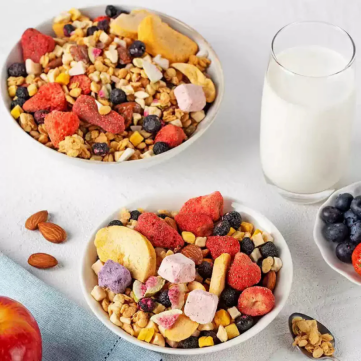
Freeze-dried fruits have traditionally been associated with breakfast cereals, trail mix, and outdoor/survival food categories. These remain strong markets, but the fastest growth in the category is happening in areas that many B2B buyers haven’t fully mapped.
Confectionery and chocolate inclusions
Freeze-dried raspberry pieces in dark chocolate, mango chunks in white chocolate bark, whole strawberries enrobed in couverture — this format has moved from artisan specialty to mainstream retail in under five years. The textural contrast between the crisp lyophilized fruit and the dense chocolate creates a sensory experience that no other ingredient can replicate cleanly on a short-ingredient label.
Functional beverages and nutritional supplements
Freeze-dried fruit powder is finding its way into protein shake blends, collagen drinks, and greens supplements — where it serves as both a flavoring agent and a natural source of polyphenols, vitamin C, and dietary fiber. The powder format dissolves cleanly in liquid systems without the cloudiness or sedimentation issues associated with juice concentrates or spray-dried alternatives.
Infant and toddler nutrition
The parental demand for clean, minimally processed first foods has driven rapid growth in freeze-dried fruit puffs and melt-in-mouth formats for the 6–24 month age group. The regulatory requirements in this segment are significantly more stringent than standard food applications — pesticide residue limits are tighter, allergen controls are more rigorous, and packaging requirements differ by market. Suppliers with the production discipline to meet these standards open a high-value, defensible market segment.
Premium foodservice and gastronomy
Michelin-starred kitchens discovered freeze-dried fruit over a decade ago. The broader premium foodservice sector — hotel breakfast programs, airline catering, boutique café chains — is now catching up. Applications range from freeze-dried blueberry garnishes on plated desserts to pineapple powder used as a natural tenderizer in marinades. For suppliers, this segment demands small batch flexibility and rapid turnaround; for buyers, it demands a supplier relationship where direct communication with production is possible.
Conclusion: The Right Questions Lead to the Right Partners
The freeze-dried fruit category has grown sophisticated enough that the old procurement instinct — find the cheapest spec-compliant source — is actively counterproductive. The value of this ingredient category lies in its consistency, its label integrity, and its application versatility. All of those properties are downstream of production quality, supplier infrastructure, and the depth of the manufacturer relationship.
For buyers and product developers, the single most valuable investment you can make before issuing a purchase order is a candid conversation with the production team. Not the sales team — the production team.
Ask about equipment age and maintenance schedules.
Check about the raw material sourcing strategy.
See their non-conformance history and what it taught them.
Know what applications their customers are building with their product and what technical challenges came up.
At FD Planet / Linyi Tianqin Food Co., Ltd., we’ve been having those conversations since 1997 — first in air-dried seasonings, now across a dedicated freeze-drying operation that was built from the ground up around the discipline of doing this right. The questions we hear from serious buyers are the same ones we ask ourselves every day on the production floor. That alignment is what makes a supplier relationship worth building for the long term.